
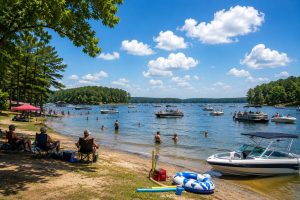
The Ark-La-Tex has two serious lakes within day-trip range of Texarkana, and July is when both of them are running at full summer capacity. Wright Patman to the south in Texas and Millwood to the east in Arkansas are different lakes with different characters — one wide and sprawling across Cass County bottomlands, the other a more intimate cypress-studded reservoir known specifically to anglers. Knowing what each offers in summer, and how to use them as day trips from Texarkana, turns a week’s stay in the area into something more than just the city.
Wright Patman Lake: The Big Water to the South
Wright Patman Lake is the primary lake resource for the Texarkana area — a 20,300-acre reservoir on the Sulphur River in Cass County, Texas, managed by the US Army Corps of Engineers. The lake is approximately 20 miles south of Texarkana, a 25 to 35-minute drive depending on which access point you’re heading to. It’s a broad, shallow lake — the average depth is only about 8 to 9 feet across the main body — which gives it specific characteristics that define the summer fishing and recreation experience.
The Fishery in July
Wright Patman’s shallow, warm water in July produces a specific fishery profile that experienced anglers on the lake know to work around. The bass — largemouth and spotted — retreat to the deepest available structure during midday heat, which in an 8-foot-average lake means the creek channels, the submerged timber in the old river beds, and the areas with the most shading structure. Early morning topwater on the grass flats near the creek mouths in the first two hours of light is the July bass pattern that Wright Patman anglers specifically time their launches for. By 9 a.m. in July, the topwater bite is typically winding down; Carolina-rigged plastics and Carolina-rigged craws worked slowly along the creek channel edges carry the afternoon.
Catfishing is the summer equalizer at Wright Patman — blue catfish and channel catfish move actively through the lake’s shallower water throughout the day in July, and the anchored catfish rod with cut bait or chicken liver on the bottom is the reliable midday technique that produces consistent results when the bass are sulking in the channel structure. Wright Patman’s blue catfish population is particularly strong — 20-pound-plus blues are not unusual catches on the lake in summer.
Boating and Recreation
Wright Patman’s size accommodates all types of water recreation — the main lake body is large enough for open-water skiing and wakeboarding in the designated areas, and the back creeks and coves give kayakers and anglers the quieter water that gets away from the summer weekend ski traffic. Multiple Corps of Engineers boat launches serve the lake: the Herron Creek Recreation Area, the Sulphur River access on the south end, and several other ramp locations managed through the Corps’ Lake Wright Patman project office. The Corps also maintains swim beaches at certain campground locations — confirm current open beach status through the Texarkana District Corps office before planning a family swim day at a specific location.
“Wright Patman in July is a morning lake and an evening lake. The middle of the day, it’s a catfish lake. Trying to fight the heat and the bass simultaneously during July midday is a losing proposition — the fish win that one every time.”
Millwood Lake: The Arkansas Trophy Fishery
Millwood Lake is a different proposition entirely — and in many ways, the more interesting summer lake in the Ark-La-Tex for visitors who are specifically here for the fishing. Located approximately 35 miles east of Texarkana in Little River County, Arkansas, Millwood is a 29,500-acre Corps reservoir that was specifically designed with a slower drawdown rate than most reservoirs, which allowed a timber pre-clearing that was less complete than usual. The result is a lake with extensive standing and submerged timber throughout its main body — exactly the structure that largemouth bass, crappie, and catfish use for habitat year-round.
The Millwood Crappie Fishery
Millwood Lake has a regional reputation for crappie that draws tournament anglers from across Arkansas and East Texas. The lake’s standing timber provides ideal spawning and holding structure for both black and white crappie — the fish are in the timber year-round, and July crappie fishing at Millwood around the standing timber with light jigs and live minnows is a reliable, consistent-catch experience even in summer heat when crappie elsewhere have scattered.
The key to summer Millwood crappie is depth and shade — fish that were in 4 to 6 feet of water along timber edges in spring have moved to the 12 to 18-foot timber zones in July’s heat. Dropping a small jig or a minnow rig vertically alongside the deep timber columns at these depths produces crappie throughout the summer that the surface-level approach doesn’t reach. A Lowrance or Garmin fish finder is the productivity tool that separates random timber-dunking from targeted depth fishing on a lake where the significant timber structure makes the submerged elements as important as the visible ones.
Bass at Millwood
Millwood’s largemouth bass fishery is one of the more underrated in the tri-state area — the combination of the extensive timber structure, the lake’s relatively stained water (which gives bass a comfort with shallower positions even in summer), and the limited overall fishing pressure compared to Wright Patman produce a quality bass experience that tournament fishermen have been quietly exploiting for decades. The Texas-rigged plastic worm punched through timber canopy positions, the flipping jig worked vertically along standing timber, and spinnerbaits cast into timber edges in the early morning are the bass presentations that the Millwood timber environment specifically rewards.
The Practical Day-Trip Structure From Texarkana
Using Wright Patman and Millwood as day-trip destinations from Texarkana is a straightforward logistics exercise. Wright Patman at 20 to 25 miles south is the easier reach — a morning launch from the Herron Creek ramp or the south end access, an early morning fishing session, and a return to Texarkana by early afternoon fits comfortably in a single day without an overnight commitment at the lake. Millwood at 35 miles east requires slightly more drive time but is still well within the day-trip range from Texarkana — a 40-minute drive to the lake, a morning fishing session, and the return in the afternoon is a complete lake day without sleeping there.
For families who want the lake experience for more than a morning — full day, swimming, picnicking, afternoon fishing — the Corps campgrounds at both lakes give overnight or multi-day options. Wright Patman’s Corps campgrounds in the Oak Pines area and the White Oak Creek area provide developed camping with electric hookups and lake access. Millwood State Park on the Arkansas side has camping with full RV hookup sites, playground, and lake access that makes it a more developed family camping destination than the Corps primitive sites.
Summer Lake Tips for the Ark-La-Tex
A few practical notes that apply to both lakes in the July heat context. Life jackets are required on motorized vessels for every occupant — the Corps-managed lakes have active enforcement. Sun protection applied before the morning launch is essential; both lakes are very exposed, and the East Texas July sun on open water produces sunburn faster than most visitors who are focused on fishing remember to account for.
Water temperature at both lakes in July runs in the mid-80s°F — warm enough that falling overboard in the heat of the day is unpleasant but not a cold-water shock emergency. In the summer humidity of East Texas, however, staying hydrated on a full-day lake outing requires active effort — bringing significantly more water than you think you need and an electrolyte supplement addresses the insidious dehydration that the lake wind and the fishing focus can mask until 2 p.m. when the headache announces itself.
For guests near the De Kalb, Texas area east of Texarkana on the way toward Millwood Lake, the RV park near De Kalb, TX page covers the routing context. Cabin accommodations at RV Park Texarkana — ideal for a longer lake-season stay that doesn’t require managing an RV between lake days — are at the cabin rentals at RV Park Texarkana page. Current rates for any length stay are at the RV Park Texarkana pricing page. And for planning a lake-season Texarkana stay from the beginning, RV Park Texarkana is where to start.
Wright Patman Lake: 20,300 acres, Cass County TX. ~20 miles south, 25-35 min drive. Average depth 8-9 ft. Largemouth/spotted bass early morning topwater, blue and channel catfish all day. Corps boat ramps at Herron Creek and south end.
Millwood Lake: 29,500 acres, Little River County AR. ~35 miles east, ~40 min drive. Extensive standing timber. Trophy crappie fishery, underrated bass. Depth fish 12-18 ft timber in July for summer crappie.
Summer water temp: mid-80s°F at both lakes. Not a cold-water concern but dehydration in East Texas heat and humidity is — bring more water than you think.
Bass timing: early morning topwater 5:30-8:30 a.m. Catfish all day. Crappie in deep timber structure throughout day.
Overnight: Corps campgrounds at Wright Patman (Oak Pines, White Oak Creek areas). Millwood State Park (AR) for full-hookup RV camping and lake access.
Frequently Asked Questions
How far is Wright Patman Lake from Texarkana?
Wright Patman Lake is approximately 20 miles south of Texarkana in Cass County, Texas — a drive of 25 to 35 minutes depending on the specific access point on the lake you’re heading to. The primary route from Texarkana is US-59 south to the lake corridor. Multiple Corps of Engineers access points surround the lake including the Herron Creek Recreation Area, the south end Sulphur River access, and other ramp locations managed through the US Army Corps of Engineers’ Lake Wright Patman project office. The proximity makes Wright Patman a practical same-day destination for Texarkana visitors who want a morning on the water without an overnight commitment at the lake.
What kind of fish can you catch at Wright Patman Lake in July?
Wright Patman Lake in July produces largemouth and spotted bass (most actively on topwater presentations in the first two hours of morning light on grass flats near creek mouths; deep structure fishing during midday), blue catfish and channel catfish (active throughout the day on bottom rigs with cut bait or chicken liver — the lake’s blue catfish population produces 20-pound-plus fish regularly), crappie (in the deeper timber and structure zones), white and black bass (in the submerged creek channels), and bream/sunfish on lighter tackle near the shoreline vegetation. The blue catfish fishery is Wright Patman’s summer standout — anglers specifically targeting blues in the lake’s channel structure in July produce some of the most consistent large-fish catches in the region.
What is Millwood Lake known for?
Millwood Lake in Little River County, Arkansas, is most specifically known for its crappie fishery — the extensive standing and submerged timber throughout the lake’s 29,500 acres creates year-round habitat for both black and white crappie that gives the lake a regional reputation for consistent crappie catches that tournament anglers from across Arkansas and East Texas specifically target. Millwood’s standing timber also makes it a productive bass lake with a specific flipping-and-pitching-to-timber fishing style that rewards presentation accuracy over casting distance. The lake is managed by the US Army Corps of Engineers, with Millwood State Park on the Arkansas shore providing the most developed family camping and lake access on the property.
Can you swim at Wright Patman Lake?
Swimming is available at designated swim beaches at certain Corps of Engineers campground locations around Wright Patman Lake. These beaches are managed by the US Army Corps of Engineers and are subject to seasonal opening and closure decisions based on water quality and staffing. Confirming current swim beach availability and open hours through the US Army Corps of Engineers’ Lake Wright Patman project office — or through the recreation.gov listing for the specific campground you’re planning to visit — before arriving ensures you don’t drive 20 miles for a swim beach that’s closed for the day. Undesignated shoreline swimming is possible at many points around the lake, but designated, monitored beaches are the safer family swimming option for children.
Is a fishing license required to fish at Millwood Lake?
Yes. Millwood Lake is located entirely within Arkansas, and an Arkansas fishing license is required for anglers 16 years of age and older fishing in the lake. Texas fishing licenses are not valid at Millwood Lake — the lake’s position in Little River County, Arkansas, means Arkansas state fishing regulations and licensing requirements apply regardless of where the angler is from or where their RV is parked. Arkansas fishing licenses are available through the Arkansas Game and Fish Commission at agfc.com, through the AGFC mobile app, or from licensed retail vendors in Texarkana’s Arkansas side and in Little River County. Confirm current Arkansas license requirements and any special Millwood Lake regulations through the AGFC before fishing the lake.
What is the best time of day to fish Wright Patman or Millwood in July?
For bass fishing at both lakes, the early morning window — launch at 5:30 to 6 a.m. and fish actively through 9 a.m. — is the most productive period in July, when water surface temperatures have dropped overnight and bass are moving and feeding in shallower positions along grass edges, timber, and creek mouths. By 10 a.m. in July, the bass typically retreat to deeper, cooler structure and become significantly harder to trigger with fast presentations. The evening window — 6:30 to 8:30 p.m. — produces a secondary activity period as the surface cools and bass come shallow again. For catfish, both lakes produce throughout the day regardless of temperature — anchored rods on the bottom produce blue and channel catfish from mid-morning through the evening at both Wright Patman and Millwood, making catfishing the productive all-day alternative when the bass bite has slowed.