
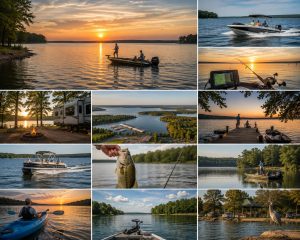
Wright Patman Lake is one of those East Texas fishing spots that locals know well and everyone else drives past. If you’re stopping in the Texarkana area, this is worth making time for.
Located about 20 miles southwest of Texarkana along the Sulphur River, Wright Patman covers roughly 20,300 acres and has about 225 miles of shoreline. It’s a U.S. Army Corps of Engineers impoundment — one of many on East Texas river systems — and it offers the kind of diverse fishing environment that rewards both dedicated anglers and casual visitors who just want to drop a line and see what happens.
For RV travelers passing through or staying near Texarkana, Wright Patman is a natural day trip or a reason to extend your stay by a day or two. This guide covers what you need to know to make the most of the lake — what’s biting, how to access it, and how to do it as efficiently as possible from an RV base camp.
What Makes Wright Patman Good for Fishing
The lake was created by the damming of the Sulphur River in the 1950s and has developed over decades into a productive fishery with a variety of species and habitat types.
The shallow upstream areas of the lake — where the Sulphur River and its tributaries feed in — create extensive shallow-water habitat with vegetation, submerged timber, and the kind of structure that fish, especially bass, consistently orient to. The deeper main lake basin provides different habitat for crappie, catfish, and white bass. The combination of these environments in a single body of water is what makes Wright Patman Lake fishing interesting across multiple species and techniques.
The lake is not heavily managed for trophy fish in the way that some Texas reservoirs are. It’s a working fishery that produces consistent numbers across species rather than headline-grabbing catches. For the RV angler who wants to have a productive day on the water with reasonably reliable action rather than hunting a specific trophy, Wright Patman delivers reliably.
“Wright Patman is the kind of lake where you go to actually catch fish rather than to talk about catching fish. That’s a meaningful distinction for most anglers.”
Wright Patman Lake Fishing: Species and Seasonal Patterns
Largemouth Bass
Bass fishing in Texas doesn’t get more accessible than Wright Patman. Largemouth bass are the primary target species for most anglers on the lake, and the shallow structure-rich areas — particularly the upper lake arms where timber and aquatic vegetation concentrate fish — produce consistent action through most of the year.
Spring (March through May) is the best overall season for largemouth bass on Wright Patman. Pre-spawn fish move shallow and become aggressive; spawn timing is roughly mid-March through April depending on water temperature; and post-spawn fish scatter and then regroup in early summer. Texas rigged soft plastics, spinnerbaits, and shallow crankbaits in the 4-8 foot range cover the most productive spring water. Working the edges of flooded timber and vegetated shorelines early in the morning produces the best results.
Summer bass fishing requires more effort — fish go deeper and less active during midday heat, though morning and evening topwater fishing around shallow structure can produce explosive action. Fall bass fishing picks up as water temperatures cool and fish move back to shallower feeding zones. Winter bass are slower but catchable on jigs worked deep and slow around main lake structure.
Crappie
Wright Patman has a solid crappie population that doesn’t get enough attention from visiting anglers. The submerged timber throughout the lake — particularly in the upper portions — holds crappie year-round. Spring crappie fishing, when fish stack up in shallow timber to spawn, is excellent. Small jigs (1/16 to 1/8 oz) in chartreuse or white fished around submerged trees produce consistent action. Minnow-baited hooks suspended under a float are equally effective for those who prefer live bait.
Fall crappie fishing is underrated on Wright Patman. Post-summer fish that have moved to deeper timber through the heat come back toward shallower areas in October and November. If you’re at the lake in fall, crappie deserve at least one dedicated morning.
Catfish
Blue catfish, channel catfish, and flathead catfish are all present in Wright Patman. Catfishing is primarily an evening and overnight activity, with cut shad, chicken liver, and prepared stink baits producing channel and blue cats in the 1-5 pound range consistently. Trophy flatheads require live bait — large shad or perch — and patience. The lake’s catfish population supports good numbers fishing without much technique refinement required, making it an excellent choice for anglers who want activity without complexity.
White Bass
White bass runs on Wright Patman in spring — when fish move up into creek arms and toward the upper river to spawn — can be genuinely spectacular. Small spinners, jigging spoons, and inline spinners fished in or near current produce fast action. The runs are temperature-dependent and can be short-lived, so catching them at the right time requires some local knowledge or current fishing report checking. The Texas Parks and Wildlife Department maintains fishing reports that can tell you whether a run is happening during your visit.
Wright Patman Lake Boating: Access and Logistics
Wright Patman Lake boating is accessible through multiple Army Corps of Engineers boat ramps around the lake’s perimeter. Several of these ramps are free and well-maintained with adequate trailer parking — a genuine advantage for RV anglers with tow vehicles and boat trailers.
The primary developed recreation areas on the lake include Winfield-Scott Park, Clear Springs, and several other COE-managed sites that offer ramp access along with restrooms and picnic facilities. The COE periodically adjusts which facilities are open based on lake levels and maintenance schedules — checking current status on the U.S. Army Corps of Engineers Fort Worth District website before your trip is a good habit, particularly in late summer when lake levels can be affected by drought conditions.
Lake Level Awareness
Wright Patman is managed for flood control as well as recreation, and lake levels can fluctuate significantly. At lower lake levels, some ramps and shallow areas become inaccessible. The COE maintains current lake level data and any ramp closures on their website. For RV anglers trailering a boat to the lake, checking lake level status before the drive is worth the two minutes it takes — arriving at a closed ramp with a boat in tow is the kind of problem you want to avoid.
For Kayak and Canoe Anglers
The shallower upstream areas of Wright Patman — particularly the Sulphur River arms — are exceptionally well-suited to kayak and canoe fishing. The combination of submerged timber, aquatic vegetation, and narrow water creates fishing conditions that favor a quiet, low-profile approach over a powered boat. Non-motorized anglers can access many areas that powerboats can’t effectively reach, and the tranquil character of these shallow backwater sections is a significant part of what makes them enjoyable.
Best Times to Fish Wright Patman
Fishing near Texarkana is best in the shoulder seasons — and Wright Patman follows that pattern clearly.
Early morning is consistently the most productive time across all species throughout the year. On summer days, the early morning window (pre-sunrise to about 9 a.m.) is often the only period when surface temperatures and activity levels support good fishing before the heat shuts things down. On fall and spring days, mornings are excellent and activity often continues through midday.
Evening fishing (the last two hours before dark) is the second-best daily window, particularly for bass and catfish in warm months. Catfishing overnight — setting lines before dark and checking at first light — is a legitimately productive technique that some anglers prefer for the relaxed pace it allows.
Weather events matter more than many casual anglers recognize. A approaching cold front in fall often triggers a feeding burst in the 24-48 hours before the front arrives. Post-front conditions (clear sky, falling temperature, high pressure) slow fishing significantly. Fishing the day before a front rather than the day after it is a consistent tactical advantage on most Texas lakes, and Wright Patman is no exception.
Staying Near Wright Patman Lake as an RVer
For RV travelers who want to use Wright Patman as the focus of their Texarkana area stop, proximity to the lake makes a real difference in how much time you actually spend on the water versus in transit.
The Wright Patman Lake RV park options near Texarkana give you the combination of lake proximity and comfortable RV infrastructure that makes a dedicated fishing trip genuinely enjoyable rather than logistically challenging. Getting on the water early without a long pre-dawn drive is a meaningful advantage for morning fishing — and it means you can fish through the evening bite without worrying about a late return to a campsite far away.
For RV travelers who are new to the lifestyle or looking for practical guidance on how to integrate fishing day trips into an RV travel itinerary, the RVing lifestyle and travel resource covers the foundational habits that make extended stays more comfortable and enjoyable — particularly useful for first-timers figuring out how to make a fishing-focused RV trip actually work.
Frequently Asked Questions
What kind of fish can I catch at Wright Patman Lake?
The primary sport fish in Wright Patman Lake are largemouth bass, crappie, blue catfish, channel catfish, and white bass. Hybrid striped bass and striped bass are also present. The lake’s diverse habitat — shallow timber-filled upper arms, vegetated shallows, and a deeper main basin — supports all of these species and allows anglers to target different fish depending on season, preference, and technique.
Do I need a Texas fishing license to fish Wright Patman Lake?
Yes. A valid Texas fishing license is required for all anglers 17 and older, regardless of whether you’re fishing from shore, a boat, or a pier. Licenses can be purchased online through the Texas Parks and Wildlife Department website, through the TPWD mobile app, or at local retailers in Texarkana. Out-of-state visitors pay non-resident license rates. Current license fees and package options are available on the TPWD website — rates change periodically, so check before purchasing.
What are the best bass fishing techniques for Wright Patman Lake?
Texas-rigged soft plastics (worms, creature baits, crawfish imitations) worked around submerged timber and vegetated edges are the most consistently productive technique on Wright Patman. Spinnerbaits and shallow crankbaits work well in spring when bass are moving shallow. Topwater lures during early morning low-light conditions in warmer months can produce aggressive strikes in the shallow, timber-rich upper lake arms. In summer, deeper-running crankbaits and Carolina-rigged plastics cover the transition between shallow timber and deeper water where fish retreat during midday heat.
Are there public boat ramps at Wright Patman Lake?
Yes. The U.S. Army Corps of Engineers maintains multiple boat ramps around the lake’s perimeter at developed recreation areas including Winfield-Scott, Clear Springs, and other sites. Most ramps are free to use. Trailer parking is available at the major access points. Because Wright Patman is managed partly for flood control, lake levels fluctuate and can occasionally affect ramp access at lower pool stages — checking current conditions through the COE Fort Worth District website before trailering a boat is a good practice, particularly in late summer and drought periods.
Is kayak fishing good at Wright Patman Lake?
Yes, particularly in the upper lake arms and Sulphur River tributary areas where the shallower, more intimate water is well-suited to human-powered craft. Kayak anglers can access timber-laden backwater areas that powerboats can’t effectively fish, and the quiet approach gives a tactical advantage for targeting pressured bass and crappie in these areas. Non-motorized boat access to Corps of Engineers recreation areas is generally permitted — confirm current access points and any applicable fees through the COE website before your trip.
What is the best time of year to fish Wright Patman Lake?
Spring (March through May) is the peak season for most species — bass in pre-spawn and spawn patterns, crappie stacking in shallow timber, and white bass running in the creek arms. Fall (October through November) is the second-best window — fish are active, crowds are minimal, and the cooler temperatures make all-day fishing comfortable. Summer fishing is productive early morning and late evening but challenging through midday heat. Winter is the slowest season but not unproductive — catfish remain active, and largemouth bass can be caught on slow-worked jigs around deeper structure.