
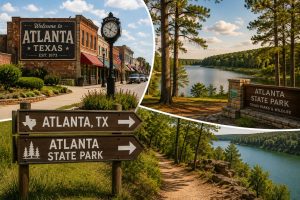
Atlanta, Texas is about 30 miles south of Texarkana. It’s a small town with its own quiet character, a state park with good hiking along an arm of Lake Wright Patman, and enough substance to fill a worthwhile day without any rush.
The Drive from Texarkana to Atlanta, TX
Atlanta is approximately 28 miles south of Texarkana on US-59 — a straight shot south through Cass County into the pine forests and farmland of East Texas. The drive takes 35 to 40 minutes and is the kind of rural highway that rewards going a little slower and paying attention. The transition from the commercial edge of Texarkana to genuine East Texas countryside happens within a few miles of leaving the city, and the visual shift to pine and hardwood forest is noticeable.
There’s nothing particularly dramatic about the drive, which is honestly part of its charm. It’s a quiet piece of East Texas that doesn’t announce itself. You arrive in Atlanta — a city of around 5,500 people, the Cass County seat — feeling like you’ve left the city behind rather than just relocated to a different version of it.
Atlanta State Park: The Primary Draw
Atlanta State Park sits on the upper end of Wright Patman Lake’s Big Cypress Creek arm, about six miles northwest of the city of Atlanta on FM-96. The park covers 1,475 acres of East Texas pine and hardwood forest on the lake shore, providing camping, hiking, swimming, boating, and fishing access in the kind of natural setting that the East Texas Piney Woods region does particularly well.
For a day trip from Texarkana, the hiking is the centerpiece. The park has several trails through the forested terrain above the lake’s shoreline — not the rugged, elevation-change hiking of the Hill Country or the Rockies, but the specific kind of East Texas woodland trail that puts you in dense forest cover with views across the water at intervals and the quiet that comes from being in a landscape that isn’t heavily trafficked. The trails run along the lake edge in sections, and the combination of forest canopy and water reflections makes for a photogenic walk even in midday light.
“Atlanta State Park has the quality of a place that rewards being there rather than photographing it. The forest, the water, the quiet — you experience them more than you document them.”
The Trails: What to Expect
The park’s trail system covers several miles of interconnected loops through the forest. The terrain is relatively level — East Texas doesn’t have dramatic topography — but the trails do dip toward the lake edge in places and offer the shoreline views that make the walk worthwhile. The forest floor in this part of East Texas is pine straw and leaf litter, which makes for good walking surface in dry conditions and a bit of mud after rain.
Spring and fall are the most comfortable seasons for the trails. Summer hiking in East Texas is warm and humid, with the insect pressure that accompanies that climate — DEET repellent and long sleeves in the morning (when ticks are most active) are the sensible approach for summer visits. Winter walks are underrated here — the mosquitoes are gone, the park is nearly empty, and the leafless hardwoods open sightlines to the lake that the summer canopy obscures.
Lake Access and Water Activities
The park has boat ramp access to the Big Cypress Creek arm of Wright Patman Lake, making it a viable launch point for visitors who trailer a boat or kayak. The lake in this upper section is narrower and more creek-like in character than the main body of Wright Patman — cypress trees line sections of the bank, and the water has the tannin-dark color characteristic of East Texas creek systems.
Fishing from the bank or by boat in this upper section of the lake produces largemouth bass, crappie, catfish, and the other warm-water species that populate East Texas reservoirs. A Texas fishing license is required for all anglers 17 and older. This section of the lake tends to be less pressured than the main body of Wright Patman accessed from the dam area, which makes it worth knowing about for anglers looking for a quieter alternative.
Atlanta, TX: The Town Itself
The city of Atlanta, Texas has the character of a working East Texas county seat that hasn’t been particularly shaped by tourism — which is actually a point in its favor for visitors who want an authentic regional experience rather than a curated one.
Atlanta’s Oil History
Cass County was part of the East Texas oil boom of the early 20th century, and Atlanta has its own share of that history. The area around Atlanta saw oil production beginning in the 1930s as the East Texas oil field’s influence extended into Cass County, and the economic shape of the town was influenced by that industry for decades. The local museum maintains the historical records of this period, and a stop there for history-oriented visitors gives context to the landscape.
The Depot Museum
The Atlanta Depot Museum, housed in a preserved historic railroad depot, covers the town’s railroad history alongside the broader regional history of Cass County. The railroad was foundational to Atlanta’s development as a commercial center in the late 19th and early 20th century — the depot represents that history in a well-preserved physical form. Museum hours vary; confirming before visiting is advisable.
Food in Atlanta
Atlanta has the local diner and barbecue culture typical of East Texas county seats. The best food options are the locally owned lunch spots rather than the highway commercial strip — the kind of meat-and-three, chicken-fried steak, and barbecue operations that have served the local population for decades. Asking at the park or checking current local reviews before your visit surfaces what’s currently operating; small-town restaurant situations change faster than any guide can track.
Wright Patman Lake: The Bigger Picture
Lake Wright Patman (or Wright Patman Lake — Texas Parks and Wildlife and the Corps of Engineers use both forms) is a reservoir on the Sulphur River operated by the Army Corps of Engineers. It covers approximately 20,300 acres when full and provides fishing, boating, and outdoor recreation access across a wide area of Cass and Bowie Counties.
Most Texarkana-area visitors know Wright Patman from the dam-area access near Texarkana — the main recreation areas on the lake’s western end closest to the city. The Atlanta State Park access on the upper Big Cypress Creek arm is a different experience of the same water body — quieter, more forested, more intimate in scale. Spending time at both ends of the lake on separate visits gives you a more complete sense of what this part of East Texas offers.
For RV travelers and campers who want to stay closer to Atlanta rather than driving from Texarkana for the day, the RV park near Atlanta, TX gives you accommodation options that put Atlanta State Park within easy morning access rather than a full round-trip drive from Texarkana. And for everything about RV Park Texarkana as a base for day trips throughout the region, RV Park Texarkana is the right starting point for planning your stay.
Frequently Asked Questions
How far is Atlanta State Park from Texarkana?
Atlanta State Park is approximately 35 to 40 miles south of Texarkana via US-59 south to Atlanta, then FM-96 northwest to the park — total drive time approximately 45 to 55 minutes. The park entrance is about 6 miles northwest of the city of Atlanta on FM-96. A Texas State Parks day-use fee applies at the entrance; the America the Beautiful federal pass does not cover Texas State Parks. Day passes and annual Texas State Parks passes are available at the gate or online through the Texas Parks and Wildlife Department website.
What is there to do at Atlanta State Park?
Atlanta State Park offers hiking trails through East Texas pine and hardwood forest along the upper arm of Wright Patman Lake, fishing access (largemouth bass, crappie, catfish), a boat ramp for lake access, swimming in designated areas, and camping for overnight guests. The park’s 1,475 acres provide a genuine East Texas Piney Woods experience with lake views throughout the trail system. Day visitors have access to all recreational facilities. The park is less visited than many Texas State Parks closer to major metros, which means more solitude and less competition for fishing spots and trail access than comparable parks near Dallas or Houston.
Is a Texas State Parks Pass worth buying for a Texarkana visit?
The Texas State Parks annual pass (currently around $70 for an individual, $25 for seniors 65+) covers day-use fees at most Texas State Parks for a year. If you’re visiting multiple state parks during your Texarkana stay — Atlanta State Park, plus potentially Caddo Lake State Park or other state parks in the region — the annual pass typically pays for itself after two to three visits. The pass is available online through the Texas Parks and Wildlife Department (tpwd.texas.gov) or at park gates. Note that the pass covers Texas State Parks specifically; federal parks and national recreation areas (like the Wright Patman Lake Corps of Engineers areas) have separate fee structures.
What fish can I catch at Wright Patman Lake near Atlanta?
The Big Cypress Creek arm of Wright Patman Lake accessible from Atlanta State Park holds largemouth bass, crappie, channel catfish, and bluegill as the primary sport fish. This upper section of the lake is less pressured than the main body near the dam, which can produce better bass and crappie fishing for visitors willing to make the drive past the more obvious access points. A valid Texas fishing license is required for all anglers 17 and older — available online at tpwd.texas.gov, through the TPWD app, and at most sporting goods retailers in the Texarkana area.
Is Atlanta, Texas worth visiting beyond the state park?
Yes, for visitors interested in East Texas history and small-town character. The Atlanta Depot Museum in the preserved railroad depot covers the town’s railroad and regional history. The downtown area has the architecture of a late 19th to early 20th century East Texas county seat. The local food culture — barbecue, country cooking, the local diner scene — gives a genuine taste of this part of Texas that the highway commercial strip doesn’t provide. Atlanta is a working county seat rather than a tourist destination, which means the experience is authentic rather than curated — worth a few hours of exploration alongside the state park visit.
What is the best season to visit Atlanta State Park?
Spring (March through May) and fall (September through November) offer the most comfortable conditions for hiking and outdoor activities at Atlanta State Park. Spring provides wildflowers along the forest floor and active birdlife along the lake edge. Fall brings mild temperatures and reduced insect pressure — and the hardwood component of the forest produces modest fall color in October. Summer visits require preparing for heat, humidity, and significant mosquito activity — morning hiking with insect repellent is manageable, but midday summer conditions in East Texas are genuinely hot. Winter visits offer solitude and the bare-canopy lake views that summer growth obscures.