
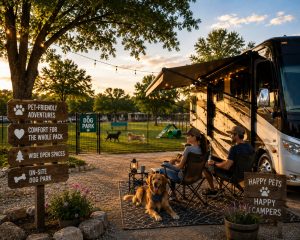
Traveling with a dog changes the whole equation of where you can go and how you plan a trip. An RV park that actually takes pet-friendliness seriously — not just a checkbox policy but a dog park and a genuine welcome — changes it back.
These are real concerns that affect real travel decisions. A lot of RV travelers plan entire routes around which parks will actually welcome their pets — not just accommodate them grudgingly, but have real infrastructure for dogs and a general culture where the four-legged part of the travel party is part of the expected picture.
At RV Park Texarkana, pet-friendly RV camping in Texas is not a fine-print policy — it’s an actual feature, with an on-site dog park that gives your dog a chance to run off the miles from the drive in a secure fenced space. This post covers what that looks like in practice, plus the full guide to traveling with dogs in an RV that every dog-traveling family needs before their first trip.
Why the Dog Park Actually Matters
A lot of campgrounds say they’re pet-friendly and mean: dogs on leash are tolerated in the campsite. That’s fine as far as it goes, but anyone who travels with a medium or large dog — or any dog that’s been cooped up in a rig for four or six hours — knows that “leash in the campsite” is not the same as exercise.
An RV park with a dog park is a genuinely different thing. A fenced off-leash area means you can let the dog actually run. Burn off the energy that has been building since the last rest stop. Introduce themselves to other dogs in a controlled, appropriate environment. Come back to the rig tired in the good way — the way that produces a settled, content dog who is happy to nap while you set up properly and make dinner.
This matters for the whole campground community, not just dog owners. A well-exercised dog is quieter. Less likely to bark at every sound that’s new to them. Less likely to make neighbors regret the fact that pets are allowed. The dog park isn’t just a convenience — it’s part of what makes a genuinely pet-friendly campground work as a community rather than as a source of tension.
“The difference between a dog that’s had a good run and a dog that hasn’t — after six hours in a rig — is a difference you can feel the moment you open the crate door.”
Traveling With Dogs in an RV: The Full Guide
If you’re newer to traveling with dogs in an RV, the combination of dog management and road travel requires some specific planning that makes the whole thing go significantly better. Here’s what experienced dog-traveling RVers have worked out.
Crate or Not?
Crating the dog while driving is the safest option by a significant margin — both for the dog in a sudden stop or accident scenario and for the driver who needs to focus on the road without managing a curious dog who has decided the passenger seat is better than their bed. Hard-sided crates secured to the floor or a fixed structural point provide more protection than soft crates or seatbelts alone in a serious incident. If your dog is comfortable in a crate from home life, extend that comfort to the rig. If they aren’t, the driving days are worth practicing this before the trip.
Temperature Management is Critical
RVs heat up faster than cars in parked conditions, and this is one of the more serious safety concerns for dog-traveling families. If you’re stopping for any extended period — a restaurant meal, a store run, anything over 15 minutes — the dog either comes with you or the rig needs to be actively climate-controlled and monitored. Many RVers use a temperature monitoring device in the rig (several brands of smart thermometers send alerts to your phone) when leaving the dog unattended. Some parks, including many in the summer months in Texas, have specific policies about leaving pets unattended in rigs — confirming this before you leave the dog is good practice.
Rest Stops and Exercise
Most dogs need a leg stretch and a bathroom break every two to three hours on a long driving day. Building these into the route rather than hoping the dog can hold it isn’t just considerate — it keeps the stress level lower and the arrival calmer. Rest areas with pet walking areas are indicated on most navigation apps now. Knowing where the next pet stop is before you need one is the organized traveler’s version of this.
Vaccination and Health Records
Most pet-friendly campgrounds require proof of current vaccinations — rabies at minimum, distemper and Bordetella at many parks. Having your dog’s health records digitally accessible (photos on your phone work fine) or in the rig means you can produce them when asked rather than scrambling. Some parks ask at check-in; others only ask if there’s an incident. Either way, being prepared is easier than the alternative.
Leash Etiquette in the Park
Even the most gregarious, well-socialized dog should be on leash except in designated off-leash areas. Other campers may have dogs that are not well-socialized, may have children who are nervous around dogs, or may simply prefer not to have an enthusiastic stranger’s dog bounding toward them across the campsite. Park rules on leash requirements exist because they make the whole environment work better for everyone, dogs included.
What Pet-Friendly Camping in East Texas Looks Like
The Texarkana area is genuinely good country for dog-traveling campers beyond the park itself. The surrounding landscape — pine forests, river corridors, the bottomland terrain of the Arkansas-Texas-Louisiana border region — provides accessible outdoor environments where dogs can walk, explore, and be dogs in a way that urban and suburban parks don’t allow.
Wright Patman Lake, about 20 minutes from the park, has shoreline access where leashed dogs can walk and drink from the lake edge. The surrounding Piney Woods hiking areas have trail sections that welcome dogs on leash. Caddo Lake, accessible as a day trip, has a specific cypress bayou atmosphere that tends to produce the kind of sustained dog sniff session that consumes an entire morning happily.
The mild East Texas climate in spring and fall makes the dog-traveling experience particularly comfortable for breeds that struggle with heat — mornings and evenings that are genuinely comfortable for outdoor activity, with enough tree cover in the region to make midday walks manageable even in warmer months.
The Community Aspect of Bringing Your Dog
Dog people tend to find each other in campgrounds. There’s a specific sociability that comes from the shared experience of traveling with pets — the conversations that start at the dog park fence, the neighbor who offers a dog treat at the right moment, the general warmth of a campground that takes pets seriously because its guests do.
This is part of what a genuine dog-friendly RV park culture provides that a technically-permissive-but-not-really-set-up-for-it campground doesn’t. The dog park isn’t just exercise infrastructure — it’s the social infrastructure of a community that actually welcomes the full family, including the members who have four legs and no opinion about the WiFi speed.
For everything about what the park offers and what pet-friendly camping in Texas looks like at RV Park Texarkana, the RVing lifestyle and regional guide gives you the full picture of the park and the area. And for booking and all the details about your stay, RV Park Texarkana is where to start.
Frequently Asked Questions
Is RV Park Texarkana pet-friendly?
Yes. RV Park Texarkana is a pet-friendly park with an on-site dog park for off-leash exercise. Dogs are welcome at the park with standard pet policies in place — current vaccinations, leash requirements outside the designated dog park area, and responsible pet ownership from all guests. Contact the park directly to confirm current pet policy details, any breed or size restrictions, and whether there are additional pet fees, as these details can change and are best confirmed before arrival.
How do I keep my dog safe in an RV during hot weather?
The primary risk is overheating in a parked rig. If you’re leaving the dog unattended in the rig, active climate control is essential — the rig’s air conditioning should be running, and a smart thermometer with phone alerts is a worthwhile investment for monitoring. Many experienced dog-traveling RVers also leave the generator running during stops to maintain AC. In extremely hot weather, some parks have specific policies about dogs left unattended in rigs — confirming the park’s policy and using common sense about leaving any pet in a vehicle during Texas summer heat are both important. Dogs should always have access to fresh water in the rig.
Do I need to show proof of vaccination for my dog at a campground?
Many campgrounds, including most pet-friendly parks, require proof of current vaccinations — particularly rabies, with some parks also requiring Bordetella (kennel cough) vaccination for dogs using communal dog park areas. Having your dog’s health records accessible (a photo on your phone works well for most parks) is the simplest preparation. Confirming specific vaccination requirements with the park before arrival is advisable if your dog’s records are not current. Most parks check at check-in or in response to an incident; some check only upon request.
How many dogs can I bring to an RV park?
Most pet-friendly RV parks allow two dogs per site as a standard policy, with some allowing more upon request or for an additional fee. Parks often also have breed and weight restrictions that are applied regardless of number. The best approach is to contact the park directly before booking if you’re traveling with more than two dogs or with breeds that are commonly restricted. Being upfront about your pets avoids any surprise at check-in that could affect your stay plans.
What are the best pet-friendly outdoor activities near Texarkana?
Wright Patman Lake (about 20 minutes from the park) offers shoreline walking with dogs on leash and is a well-established day trip for dog-traveling campers in the area. The surrounding Piney Woods region has trail sections that welcome leashed dogs and provide the kind of scent-rich environment that makes outdoor dog time genuinely fulfilling rather than just a bathroom break. Caddo Lake, about an hour away, has bayou-edge access points where leashed dogs can experience the cypress-and-water environment that characterizes that part of East Texas. Always check trail-specific pet policies, as some state and national recreation areas have designated dog-prohibited zones.
How do I help my dog adjust to RV travel for the first time?
The most common first-timer challenge is the combination of confinement and constant new stimuli that RV travel involves. Practical strategies that help: crate training before the trip if the dog isn’t already crate-comfortable, bringing familiar bedding from home to establish a scent-familiar safe space in the rig, starting with shorter driving days on the first trip to let the dog adjust to the motion and schedule before adding long days, building in regular exercise breaks during driving days rather than trying to cover maximum distance, and keeping the dog’s routine (feeding times, exercise times) as consistent as possible despite the changing environment. Most dogs adapt to RV life quite quickly — the combination of being near their family and the sensory richness of new places suits a lot of dogs very well.