
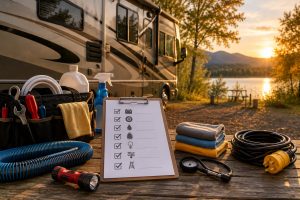
Your rig just spent a full summer earning its keep — long drives, blasting AC, dusty roads, and probably a lot more UV exposure than any other three-month stretch of the year. Before fall travel season kicks off, running through a genuine end-of-summer checklist catches the small issues that summer’s heat and use created, before they turn into a roadside problem once cooler weather travel gets underway.
Roof and Exterior: What Summer Sun Does
Inspect Roof Sealant and SeamsSummer’s intense UV exposure and heat cycling accelerate sealant degradation faster than milder seasons do. Walk the roof (safely, per your rig’s specific access guidance) and check every seam and every point where something penetrates the roof — vents, AC units, antenna mounts, skylights — for cracking, shrinkage, or gaps. Address anything you find now rather than carrying a developing leak risk into fall travel and the rain that often comes with it.
Check the Awning FullyInspect the awning fabric for UV-related fading, weakening, or small tears that may have developed over a summer of use, and check the arms and hardware for any looseness or wear. A summer of deployment in strong sun and occasional wind puts real stress on both the fabric and the mechanical components.
Wash and Wax the ExteriorA summer’s accumulation of road grime, bug residue, and UV exposure takes a visible toll on exterior finishes. A thorough wash followed by a coat of wax or UV-protectant product for your specific exterior material helps protect against further sun damage and gives you a clean surface to actually see any developing issues — cracks, chips, or wear — that road dust might otherwise hide.
Tires and Undercarriage: The Summer Heat Factor
Inspect Tires ThoroughlySummer heat is genuinely hard on tires — hot pavement and sustained highway speeds during summer travel accelerate wear and can reveal or worsen existing issues. Check tread depth, look for any sidewall cracking or bulging, and confirm tire pressure is at the correct specification for your rig’s current load, since summer heat itself affects pressure readings throughout the day. Any tire showing significant wear or damage should be addressed before fall travel begins, not discovered on the road.
Check Undercarriage and Suspension ComponentsA summer of driving, particularly if it included any rough roads or extended mileage, is worth following up with a look underneath the rig for anything obviously loose, damaged, or leaking. This doesn’t need to be an exhaustive professional inspection every single season, but a visual check for anything clearly wrong is a reasonable habit before a fall travel push.
“The stuff that fails on the road in October is almost always something that was quietly developing since June. A cracked sealant seam, a tire that’s been running low, a battery connection that’s been slowly corroding. None of it happens overnight — it happens over a summer, and a proper end-of-season check is what actually catches it before it becomes a breakdown.”
Electrical and Battery Systems
Inspect Battery Health and ConnectionsA summer of heavy AC use puts real demand on your RV’s electrical system, and battery terminals and connections are worth a visual check for any corrosion or looseness that may have developed. Testing battery health, particularly if your batteries are more than a couple years old, helps you catch a developing issue before it results in a dead battery at an inconvenient moment during fall travel.
Test All Electrical SystemsRun through your interior and exterior lighting, your AC and heating systems (yes, testing the heat even at the end of summer, since fall travel will need it), and any other electrical systems to confirm everything that was working in June is still working now after a full season of use.
Plumbing and Water Systems
Check for Leaks and Test Water SystemsInspect under sinks, around the water heater, and at any visible plumbing connections for signs of leaks that may have developed over a season of use. Run water through all faucets and check that your water heater is functioning properly, since a plumbing issue that’s manageable to address at home is a much bigger problem discovered mid-trip.
Interior Systems and General Condition
Test AC and Heating Systems TogetherBeyond confirming your AC still works after a summer of heavy use, specifically test your heating system now, before you actually need it on a cool fall morning. A heating system that’s sat unused since last spring can develop issues that are much easier to address at home than discovered on a genuinely cold night on the road.
Check Window and Door SealsSummer heat can affect seal materials over time, and a quick check of window and door seals for any cracking or gaps helps confirm your rig will keep weather out appropriately as fall brings a different mix of rain and temperature swings than summer’s dry heat.
Building Your Own Seasonal Checklist Habit
The practical approach that works well: set aside a specific day for this inspection rather than trying to catch everything piecemeal between trips, and keep a simple written or digital checklist you actually follow each season rather than relying on memory. Addressing anything you find immediately, rather than making a mental note to deal with it “eventually,” is what actually prevents small issues from becoming expensive or trip-disrupting problems. For guests wrapping up a Texarkana stay before heading into fall travel, the simple RV departure checklist for Texarkana stays covers the specific pre-departure routine that pairs naturally with this broader seasonal maintenance check.
For full-time or extended-stay RVers specifically, building this kind of seasonal check into your regular routine matters even more, since your rig is your only home rather than a vehicle used for occasional trips. The full-time RV living in Texarkana guide covers the broader picture of maintaining a rig as your primary residence, which this seasonal checklist fits into as one recurring piece.
Roof/exterior: inspect all sealant/seams (UV accelerates degradation), check awning fabric and hardware, wash and wax/UV-protect the exterior.
Tires/undercarriage: check tread, sidewall condition, and pressure (summer heat affects readings); visual check underneath for anything loose, damaged, or leaking.
Electrical: inspect battery terminals/connections for corrosion, test battery health if older, run through all lighting and AC/heat systems.
Plumbing: check under sinks and around the water heater for leaks, run all faucets, confirm water heater function.
Interior systems: test heating now (before you need it), check window/door seals for cracking or gaps ahead of fall’s rain and temperature swings.
Habit: set aside a specific inspection day, use a written checklist, address findings immediately rather than deferring.
For guests planning a Texarkana stay before or during fall travel, the about RV Park Texarkana page gives the fuller picture of the property. And for booking a stay to run through your own end-of-summer checklist, RV Park Texarkana is the starting point.
Frequently Asked Questions
What should be on an end-of-summer RV maintenance checklist?
A thorough end-of-summer checklist should cover roof and seam sealant inspection, awning fabric and hardware condition, exterior washing and UV protection, tire tread and pressure checks, battery and electrical system testing, plumbing leak checks, and confirming both AC and heating systems are functioning properly. This covers the specific wear that summer heat, UV exposure, and heavy use create, giving you the chance to address issues before fall travel begins rather than discovering them on the road.
Why does summer heat specifically affect RV roof sealant?
Intense summer UV exposure and repeated heat cycling accelerate the natural degradation of roof sealant faster than milder seasons do, causing cracking, shrinkage, or gaps to develop around seams and roof penetrations like vents and AC units over the course of a season. This is why an end-of-summer inspection specifically, rather than a generic annual check at any time of year, is well-timed to catch sealant issues that summer conditions have specifically caused or accelerated.
Should I test my RV’s heating system at the end of summer?
Yes. Testing your heating system before you actually need it on a cool fall morning, rather than assuming it will work after sitting unused since last spring, is a practical step that catches developing issues while you’re still at home or in a familiar location rather than on the road during a genuinely cold night. A heating system that hasn’t run in months can develop problems that are far easier to diagnose and address in a controlled setting than mid-trip.
How does summer heat affect RV tires specifically?
Hot pavement and sustained highway speeds during summer travel accelerate tire wear and can reveal or worsen existing issues like sidewall cracking or uneven tread wear. Summer heat also affects tire pressure readings throughout the day, since air expands with heat, making pressure checks during this season particularly important for accuracy. Inspecting tires thoroughly at the end of summer, before a fall travel push, helps catch wear or damage before it becomes a roadside issue.
How often should I do a full seasonal RV inspection?
A thorough seasonal inspection at the transition points between major seasons, particularly at the end of summer before fall travel and again before winter storage or cold-weather use, is a reasonable and widely recommended interval for catching season-specific wear and developing issues. Setting aside a specific day for this inspection, and following a written checklist rather than relying on memory, helps ensure the check is actually thorough rather than partial or rushed.
What is the most commonly overlooked item on an RV seasonal checklist?
Roof and seam sealant condition is frequently overlooked, since it’s not visible during normal use and requires actually getting on the roof or specifically checking it to notice developing cracks or gaps. Battery terminal corrosion and window or door seal condition are also commonly missed, since these issues develop gradually and aren’t obvious until they cause a noticeable problem like a leak or an electrical failure. Addressing these commonly overlooked items specifically as part of a thorough checklist, rather than only checking the more obvious items like tire tread, catches problems that would otherwise go unnoticed until they cause a bigger issue.