
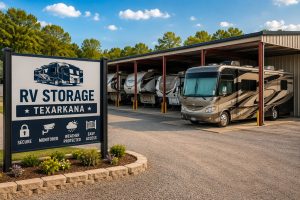
You don’t need a place to park your RV forever — just somewhere safe, accessible, and reasonably priced between trips. In Texarkana, the storage options are broader than most RV owners realize, and finding the right fit takes about as much effort as doing this research once.
Why RV Storage Matters More Than Most Owners Think
The instinct for a lot of new RV owners is to park the rig in the driveway or in the backyard and call it solved. Some neighborhoods allow this indefinitely. Many don’t — HOA rules and city ordinances in the Texarkana area, as in most developed municipalities, often restrict long-term RV parking in residential areas. The enforcement varies, but getting a notice after parking the rig for several months that it needs to be moved is a frustrating situation that a storage arrangement avoids entirely.
Beyond the regulatory reality, the condition argument for proper storage is legitimate. An RV sitting uncovered in the East Texas sun and weather cycle — UV, heat, humidity, occasional severe weather — degrades in ways that covered or enclosed storage prevents. The roof sealant breaks down faster under direct sun exposure. The exterior oxidizes. UV damage to interior fabrics and dashboard materials accumulates over seasons of direct sun exposure. The cost differential between open-lot and covered storage needs to be weighed against the maintenance cost it defers.
“Every season an RV sits uncovered in a Texas summer is a season of UV and heat damage that enclosed storage would have prevented. The math on covered storage often works out when you factor in what it saves in maintenance.”
Types of RV Storage Available in Texarkana
The RV storage lot category covers several distinct storage formats that differ meaningfully in what they provide and what they cost.
Open Lot Storage
Open lot storage is the most common and most affordable option — a paved or gravel lot where RVs are parked in assigned spaces with no overhead protection. The lot is typically fenced and may have gate access control (keypad, key fob, or card entry) and security lighting. It solves the driveway/neighborhood parking problem and provides a dedicated location, but doesn’t protect the rig from sun, rain, or weather events.
Open lot storage in the Texarkana area typically runs $40 to $80 per month depending on lot size, location, and the specific facility’s security infrastructure. For owners who want a minimum-cost storage solution for a rig that’s in active use and not sitting for extended periods, open lot storage is a reasonable choice. For a rig that will sit for several months between trips, the weather exposure cost over time adds up.
Covered Storage
Covered storage puts the rig under a roof — typically a metal carport-style structure — without fully enclosing the sides. This provides protection from direct sun and most rain events while allowing airflow around the rig. The UV protection alone makes a meaningful difference in the rate of exterior oxidation and interior material degradation compared to open-lot exposure.
Covered storage in the Texarkana area typically runs $80 to $150 per month depending on the width of the covered space (needed for wider rigs and fifth wheels), the facility’s access infrastructure, and whether utilities are available at the space. For owners storing a rig through the summer season specifically, covered storage is worth the premium over open lot given the intensity of East Texas summer UV and heat.
Enclosed Storage
Enclosed storage puts the rig inside a building — a large warehouse or climate-controlled facility with walls, overhead door access, and full weather protection. This is the premium option and the one that most protects the rig’s condition over extended storage periods. Temperature-controlled enclosed storage adds the benefit of protecting interior materials, electronics, and seals from the extreme temperature swings that uncontrolled storage in East Texas can produce (summer interior temperatures in a closed rig on an open lot can reach 130-140°F).
Enclosed storage runs $150 to $350 or more per month depending on the size of the space, whether climate control is provided, and the facility’s location and amenities. For high-value rigs or rigs stored for extended periods without regular access, enclosed storage is the protection investment that preserves resale value most effectively.
What to Look For in Any Storage Facility
The storage type is one variable. The quality and management of the specific facility is another, and it matters as much as the category.
Security Infrastructure
Gated access with individual code or fob entry (rather than a shared combination that never changes), perimeter fencing in good condition, security lighting covering the full storage area, and video surveillance coverage of the access points and lot are the baseline security features worth confirming. Facilities that can tell you about their security monitoring — whether the cameras are monitored, what the access log retention is — demonstrate active security management rather than just security theater.
Access Hours
24-hour access isn’t always necessary, but access during extended hours — early morning departure for trips, late evening returns — is a practical need that facilities with limited access windows create friction around. Confirming that the facility’s access hours actually fit your usage pattern before signing an agreement avoids the frustration of discovering that your Friday afternoon departure requires accessing the rig during the facility’s closed hours.
Lot Condition and Drainage
An RV sitting in standing water after rain is bad for the undercarriage, the tires, and the overall condition of the rig. Touring a facility on or shortly after a rain event — or simply asking how the lot drains during heavy rain — gives you information that matters for a rig sitting through Texarkana’s rainy season. Gravel lots with good drainage, or paved lots with proper slope, are meaningfully better than improperly graded facilities that pool water around stored vehicles.
Insurance and Liability
Understanding what the storage facility’s insurance covers — and what it doesn’t — is important before signing. Most storage facility agreements disclaim liability for damage, theft, or weather events on the premises. Your own RV insurance policy’s coverage for stored vehicles (as opposed to vehicles in active use) may or may not cover the rig while in storage — confirming your policy’s stored-vehicle provisions before choosing a facility is standard due diligence. Some insurers require vehicles to be in a fenced and gated facility to maintain comprehensive coverage; others have different requirements. Know your policy before you park.
Rig in active use (6+ trips/year), short storage windows: open lot at a well-managed facility is cost-effective.
Rig stored through summer season: covered storage to prevent UV and heat damage justifies the premium over open lot.
High-value rig, extended storage, infrequent use: enclosed or climate-controlled for maximum condition preservation.
All options: confirm gated entry with individual access codes, security lighting, lot drainage, access hours, and your own insurance policy’s stored-vehicle coverage before signing.
For RV storage options at RV Park Texarkana — where storage access pairs naturally with the park’s RV facilities and the convenience of a known, managed location near the I-30/US-59 corridor — the RV storage options at RV Park Texarkana page covers what’s currently available and how to arrange storage. For everything about the property — park, storage, and the full range of facilities — RV Park Texarkana is the starting point.
Frequently Asked Questions
How much does RV storage cost in Texarkana?
RV storage costs in the Texarkana area vary by storage type and facility. Open lot storage typically runs $40 to $80 per month. Covered storage (roof with open sides) runs $80 to $150 per month depending on space size and facility amenities. Enclosed storage in a building runs $150 to $350 or more per month for temperature-controlled options. These ranges reflect current market conditions and can vary with demand and specific facility location. Confirming current pricing directly with facilities is advisable, as storage rates in the area can change seasonally and with facility improvements.
Can I store my RV in my driveway in Texarkana?
It depends on your specific neighborhood and local regulations. Texarkana area municipalities and many HOAs have ordinances or rules restricting long-term RV parking in residential areas — on driveways, in yards, or on the street. Regulations typically specify maximum parking duration (often 72 hours), visibility restrictions, and vehicle size limits. Enforcement varies by location and neighbor complaint patterns. Before relying on home storage, checking your specific city’s municipal code and any HOA rules applicable to your property gives you the accurate answer for your situation. Many Texarkana area RV owners who initially planned to park at home discover a storage arrangement is necessary or preferable within the first year of RV ownership.
What is the difference between covered and enclosed RV storage?
Covered storage puts the RV under a roof structure (typically a metal carport) that protects it from direct sun and most rain events, but with open sides that allow airflow and some weather exposure at the sides. The primary benefit is UV protection from overhead sun exposure, which meaningfully reduces exterior oxidation and interior material degradation. Enclosed storage puts the RV inside a building with walls and an overhead door, providing full weather protection from all directions. Temperature-controlled enclosed storage also protects from extreme heat that can damage interior materials, seals, and electronics. Enclosed storage is more expensive but provides significantly better condition protection for extended storage periods.
Does my RV insurance cover damage while in storage?
This varies by policy and insurer. Many RV insurance policies cover comprehensive damage (theft, weather events, fire) while the vehicle is in storage, but the specific coverage terms depend on your policy. Some insurers require the vehicle to be stored at a fenced and gated facility to maintain comprehensive coverage; others have different storage-related requirements. Reviewing your policy’s stored-vehicle provisions before choosing a storage facility is the right sequence — you may discover your coverage requires a specific facility type, or you may find your coverage is broader than expected. Your insurance agent is the most reliable source for this answer specific to your policy.
What should I do to prepare my RV for extended storage?
Proper preparation before extended RV storage prevents the maintenance issues that stored vehicles commonly develop. Key steps include: thoroughly cleaning the interior and removing all food to prevent pest attraction; removing or fully draining the freshwater system if storage extends into freezing weather (Texarkana winters occasionally produce freeze events); checking and resealing any roof or body sealant showing wear before storage begins; disconnecting or maintaining the battery (a battery tender connected to shore power maintains charge over months; alternatively, disconnect and store the battery indoors); covering the tires with UV-protective tire covers for open or covered storage to reduce UV sidewall degradation; and leaving interior vents slightly open if the storage environment doesn’t control humidity, to allow moisture to dissipate rather than accumulate inside.
How do I find secure RV storage near Texarkana?
The most reliable approach is direct inquiry with facilities that specifically advertise RV and vehicle storage in the Texarkana area. RV Park Texarkana’s storage facility is one option positioned near the I-30/US-59 interchange with the access convenience that a managed park property provides. Beyond that, searching “RV storage Texarkana” on Google Maps surfaces current facilities with reviews and contact information. When evaluating any facility, confirm the specific security infrastructure (gated access with individual codes, lighting, surveillance), current availability and pricing for your rig’s size, access hours, and the drainage situation on the lot. A physical visit to the facility before committing is worth the time — the condition and management approach of the property is visible in person in ways that website descriptions don’t convey.