
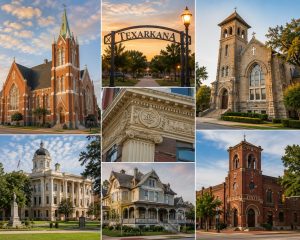
Texarkana sits on the state line, and somehow that in-between quality shows up in its architecture too — a city that built beautiful things and mostly kept them.
There’s something about old buildings that makes you slow down. Not just because they’re pretty — though most of them are — but because they carry a kind of weight. Like the walls have seen things. Texarkana has that in spades.
People often think of this twin-state city as a pass-through. A place you stop for gas between Dallas and Little Rock. But if you’ve ever actually walked the historic district or stood in front of one of its older churches on a quiet morning, you know there’s a lot more going on here than most folks realize.
This guide walks you through the best scenic churches and standout historic architecture in Texarkana — a proper Texarkana architecture tour for anyone who loves to travel with intention. And if you’re rolling in by RV, you’re actually in luck. The area has some great options for settling in and exploring at your own pace. More on that in a bit.
Why Texarkana Deserves More Attention From Heritage Travelers
Here’s the thing about Texarkana — it developed fast in the late 1800s, right at the height of railroad expansion. Money came in, civic pride followed, and people built things that were meant to last. Churches, courthouses, train depots. You can still see a lot of those today.
The city straddles the Texas-Arkansas state line, which gives it an unusual identity. Two states, one community, and a shared architectural legacy that most heritage travel guides completley overlook. That’s a shame, because this is genuinely one of the more interesting places in the region for anyone interested in history and old stonework.
“Texarkana built things with permanence in mind. And a lot of it is still standing.”
If you’re planning a heritage travel Texarkana itinerary, give yourself at least two days. One won’t cut it.
Historic Churches in Texarkana Worth Seeking Out
First Baptist Church of Texarkana
This one’s been around in various forms since the 1870s. The current building is a solid example of traditional Southern Baptist architecture — red brick, clean columns, and a steeple that reads well from across the street. It’s the kind of church that anchors a neighborhood visually. If you’re doing a walking tour of downtown, it fits naturally into the route.
St. Edward Catholic Church
St. Edward has that quiet grandeur you find in older Catholic parishes across the South. The interior is worth stepping into if it’s open — stained glass that does interesting things with afternoon light, and a layout that feels both formal and a bit intimate. The exterior stonework is particularly well-preserved. Definitely one to photograph.
Texarkana First United Methodist Church
Another anchor of the downtown area, the First United Methodist Church reflects the kind of civic investment that defined Texarkana in the early 20th century. The congregation has been active for well over a century, and the building itself shows the ambition of that era. Brick construction, arched entryways, and a presence that commands the block. Good example of the ecclesiastical architecture that made historic churches Texarkana worth documenting.
Congregation Bnai Israel Synagogue
This one often surprises first-time visitors. Texarkana had a meaningful Jewish community in the late 1800s and early 1900s, and the synagogue reflects that. The building’s architecture leans more toward classical revival styling, which sets it apart visually from the surrounding streetscape. A quiet but genuinely significant piece of local history.
Beyond the Churches — Notable Historic Architecture in Texarkana
The churches are the heart of any good Texarkana architecture tour, but the city’s historic buildings extend well beyond religious sites.
The Federal Building and U.S. Post Office (on the State Line)
This is probably the most photographed building in Texarkana, and for good reason. It literally sits on the state line — the only federal building in the country that does. Built in 1933 in a neoclassical federal style, it’s all limestone columns and symmetry. The building functions as both a Texas and Arkansas post office simultaneously. Worth spending some time here just taking it in.
Texarkana Union Station
The old Union Station is one of those buildings that makes you wish rail travel still looked like this. Built in the early 1900s to serve the railroad lines that made Texarkana important, the station has Spanish Colonial Revival elements that were fairly unusual for this part of East Texas. If you’re interested in historic buildings East Texas, this one has to be on your list.
The Perot Theatre
Built in 1924 as the Saenger Theatre, this performance venue is one of the best-preserved historic theaters in the entire region. The interior features ornate plasterwork, a painted ceiling, and the kind of theatrical grandeur that feels genuinely lost in modern construction. The theater was extensively restored in the 1970s and remains an active performance venue — so you might actually catch a show here, which makes the visit even better.
If you’re planning a trip with the family and want to balance the architecture tour with some downtime, check out what exploring Texarkana TX looks like beyond the historic district. There’s more to the city than most people expect.
The Texarkana Texas City Hall
City Hall is another good example of the civic ambition that shaped Texarkana’s built environment. The building has aged well, and it reads as a piece of institutional architecture that was clearly designed to project permanence. Worth a look if you’re already downtown, which you probably will be.
Planning Your Architecture Tour in Texarkana
The best approach is to anchor yourself in or near the downtown core and walk. Most of the major historic sites are within reasonable distance of each other. Morning light is great for the churches — east-facing facades pick up that early warmth in a way that photographs beautifully.
If you’re coming from out of town and want to really sink into the area, staying somewhere comfortable and close matters. A lot of visitors doing heritage travel Texarkana style are road-trippers and RV travelers who want flexibility. If that’s you, it’s worth looking into RV Park Texarkana as a base — convenient, well-located, and a good setup if you’re planning multiple days of exploring.
There’s also something to be said for approaching this part of the country slowly. If you’re heading into East Texas from the west, Texarkana makes a natural first stop. And if you’re curious about what life in this region actually looks like — not just the tourist version — there are good resources on living in Texarkana that give you a feel for the community beyond the landmarks.
Tips for Getting the Most Out of Your Visit
A few practical notes before you go:
Check hours before visiting churches. Most historic churches in Texarkana are active congregations. They’re not always open for casual visitors during the week. Calling ahead or checking online saves a wasted trip.
Bring a camera. This one’s obvious, but the light in Texarkana in the morning and late afternoon is genuinely good for architectural photography. The brick tones, the sky, the older streetscapes — it all works together.
Wear good shoes. The sidewalks in older parts of the historic district aren’t always smooth. Nothing dangerous, just the usual uneven pavement that comes with age.
Be respectful at active worship sites. Some of these churches hold services throughout the week. If a service is underway, come back later.
For those who want to extend the trip into broader East Texas, it’s worth knowing that the region has a lot to offer beyond Texarkana itself. RV travelers especially have options — RV park near Linden TX is a great option if you’re pushing further south and want to keep exploring the region’s history and landscapes.
The Cultural Value of Texarkana’s Architecture
There’s a reason that cultural attractions Texarkana keep drawing people back. This isn’t a city that bulldozed its past to build parking lots. A lot of what was built in the late 1800s and early 1900s is still standing, still in use, still part of daily life here.
That’s increasingly rare. And it makes Texarkana genuinely valuable as a destination for people who travel for meaning, not just scenery.
The churches especially carry that quality. They were built by communities that wanted something to last. They put care into the stonework, the stained glass, the steeples. Walking past them today, you feel some of that intention still present in the material.
If you love scenic landmarks Texas has to offer — and want something a little off the beaten highway — Texarkana rewards slow travel. Come for the architecture. Stay for the feeling that not everything old has been erased.
And if you’re traveling by RV and want to read up on the RV lifestyle before hitting the road, there’s solid practical content about RVing tips and travel worth checking out before your trip.
Frequently Asked Questions
Are the historic churches in Texarkana open to visitors?
Most are active congregations, so public access varies. Some churches welcome visitors during the week; others are only open for services. It’s best to call ahead or check the church’s website before making the trip. The exteriors are always accessible and worth seeing regardless.
What is the best time of year to do a Texarkana architecture tour?
Spring and fall are ideal. The weather is mild, the light is good, and the crowds are manageable. Summer in Texarkana gets hot, which makes long walking tours a bit uncomfortable. Winter is quiet but perfectly fine for a focused architecture visit.
Is Texarkana worth visiting for heritage travel?
Absolutely. Texarkana has a well-preserved historic core with churches, civic buildings, and landmarks that date back to the railroad era of the late 1800s. For travelers interested in Southern history and architecture, it’s an underrated destination with genuine depth.
How do I get around Texarkana’s historic district?
Most of the major historic sites are walkable from the downtown core. A car is helpful for reaching sites that are a bit further out, but the central historic area is compact enough to cover on foot over a half-day or full day.
Are there RV-friendly accommodations near the historic district?
Yes. The Texarkana area has RV park options that put you within reasonable distance of the historic district. Staying in an RV gives you the flexibility to explore at your own pace, which suits this kind of heritage travel well.
What other historic buildings should I see in Texarkana besides the churches?
The Federal Building on the State Line, the Perot Theatre, Union Station, and City Hall are all worth including in any architectural tour. Each represents a different chapter of the city’s history and a different building tradition.